


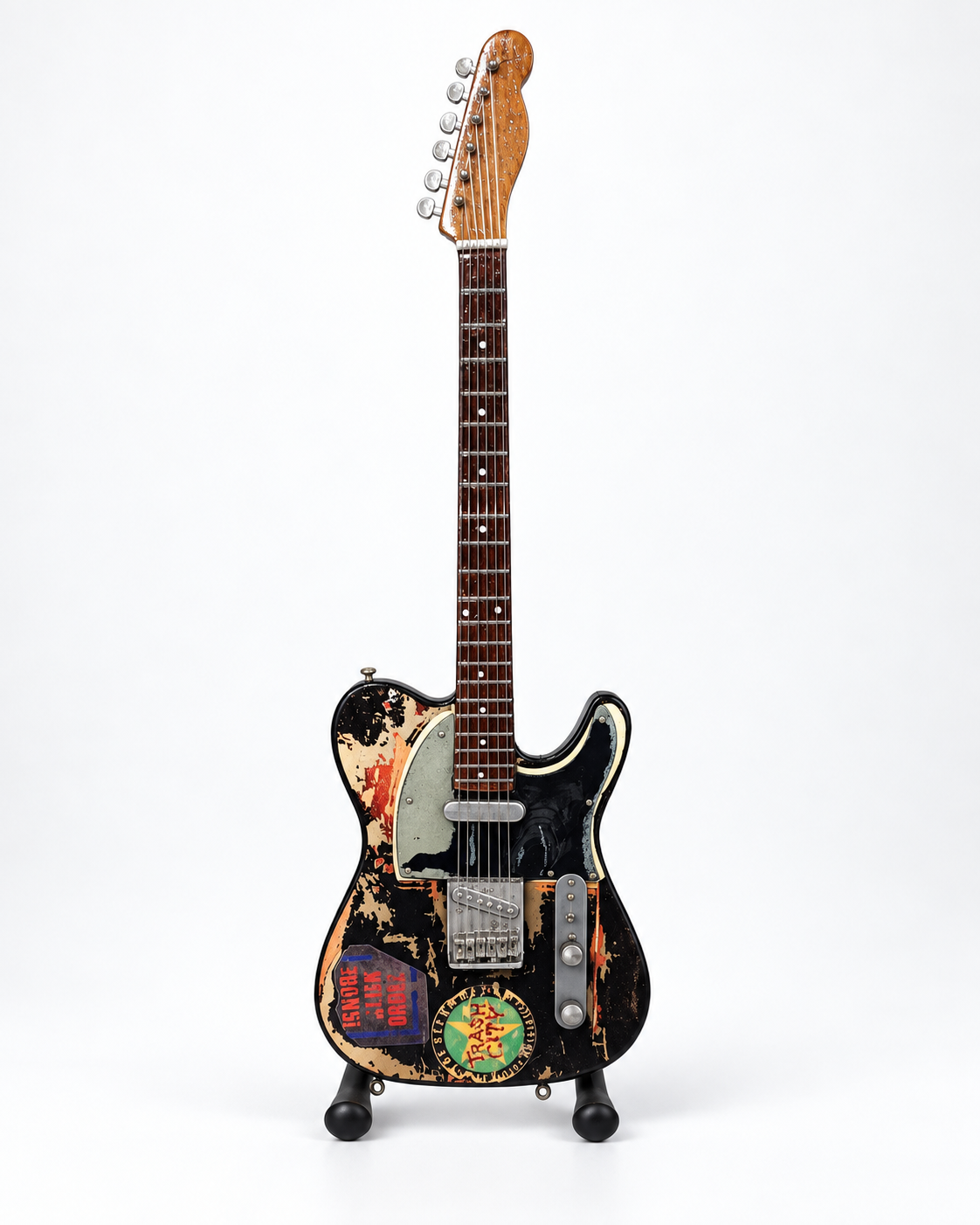
Catalog examples
Silhouettes to compare at a glance
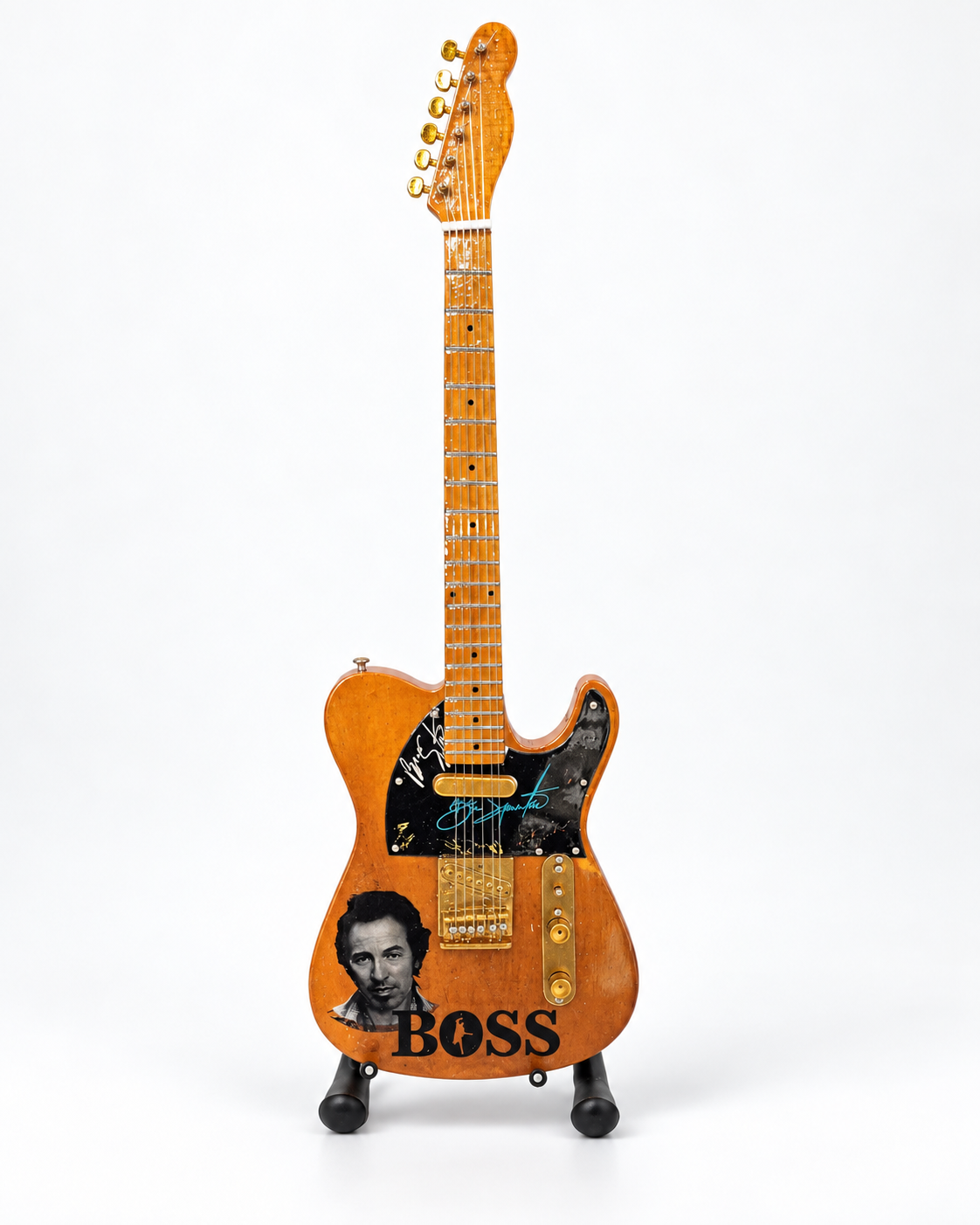
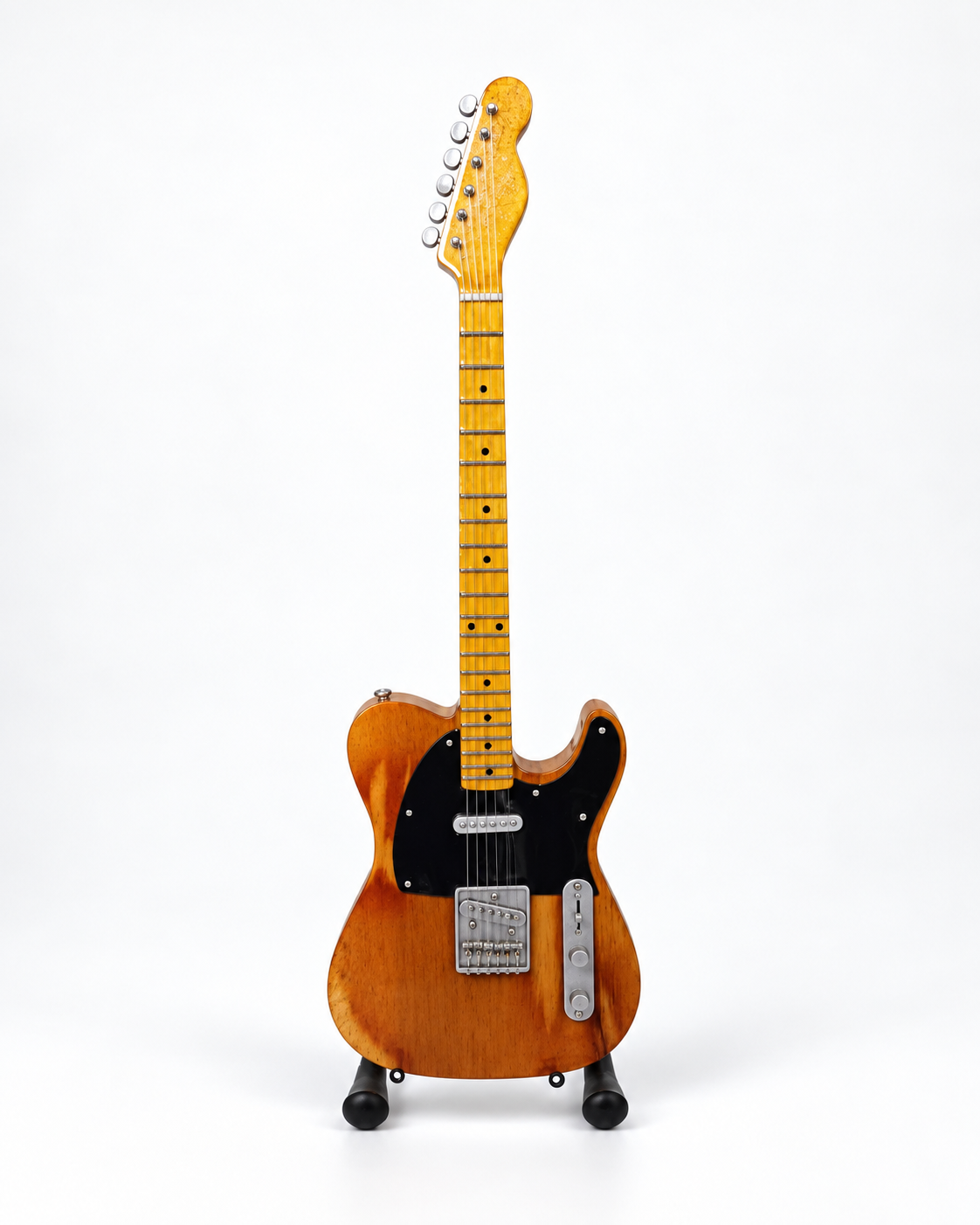
A simple silhouette that lets the finish speak
A miniature Telecaster has a particularly straightforward outline. Its relatively restrained shape brings finishing details to the foreground: natural wood, a relic appearance, stronger colors or decoration associated with an artist.
Create a neutral foundation with a wood finish
A natural-wood Telecaster can provide breathing space in a colorful collection. It pairs easily with black, red or blue miniatures and adds a more organic presence to a display dominated by bold graphics.
Use artist-inspired versions to add character
The pages for Joe Strummer and Bruce Springsteen show how the same broad silhouette can take on very different styles. The aim is not to recreate exact instrument histories but to compare finishes and see how they work within a collection.
Pair a Telecaster with more substantial shapes
Beside a Les Paul or SG, the Telecaster creates an appealing contrast in proportions. It can serve as a transition between two groups or a calmer piece in the middle of a busy display.
Keep your display coherent
A simple silhouette should not disappear behind too many objects. The guide to displaying your miniature guitars helps you find the right spacing and keep each instrument easy to appreciate.
For a broader collecting strategy, consult the guide to choosing a collectible miniature guitar : it connects shapes, musical influences, interior decoration and display choices.
A restrained shape that puts finishes first
The Telecaster has a relatively simple outline. On a miniature, this makes natural wood, worn paint, stickers, portraits and large lettering especially noticeable. It is a useful family for learning to compare pieces by their graphic treatments rather than by their silhouettes alone.
A natural-wood Telecaster provides a quiet visual reference. Alongside it, a relic or illustrated version tells a much stronger story, even though the basic outline remains similar.
Which shapes pair well with it?
Its compact lines complement the curves of an S-Type or the rounder body of an acoustic. Alternating these outlines gives a cabinet a readable rhythm. If you prefer an all-Telecaster collection, vary the colors and degrees of wear to avoid repetition.
The finish often tells more than the shape
The outline of a Telecaster miniature changes little between models, so the surface makes the difference. Natural wood looks calm, a relic finish suggests a rougher aesthetic, and a large portrait can turn the body almost into a poster. This variety lets you build a coherent series without seeming to buy the same item three times. Compare images side by side before choosing.
One final tip: when two Telecasters look alike, compare the pickguard, neck color and amount of artwork on the body. These details greatly affect how each miniature looks once displayed.