


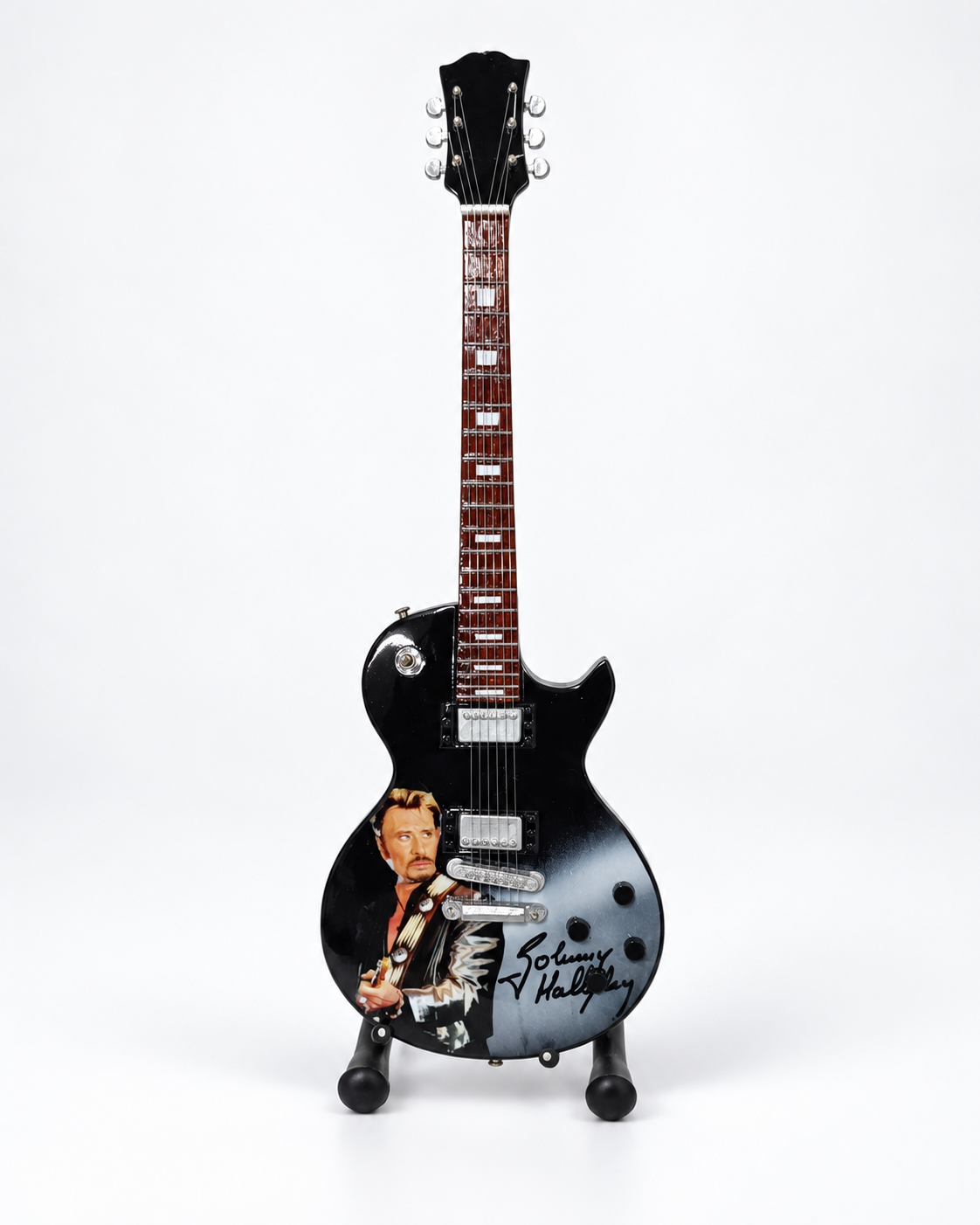
Catalog examples
Silhouettes to compare at a glance
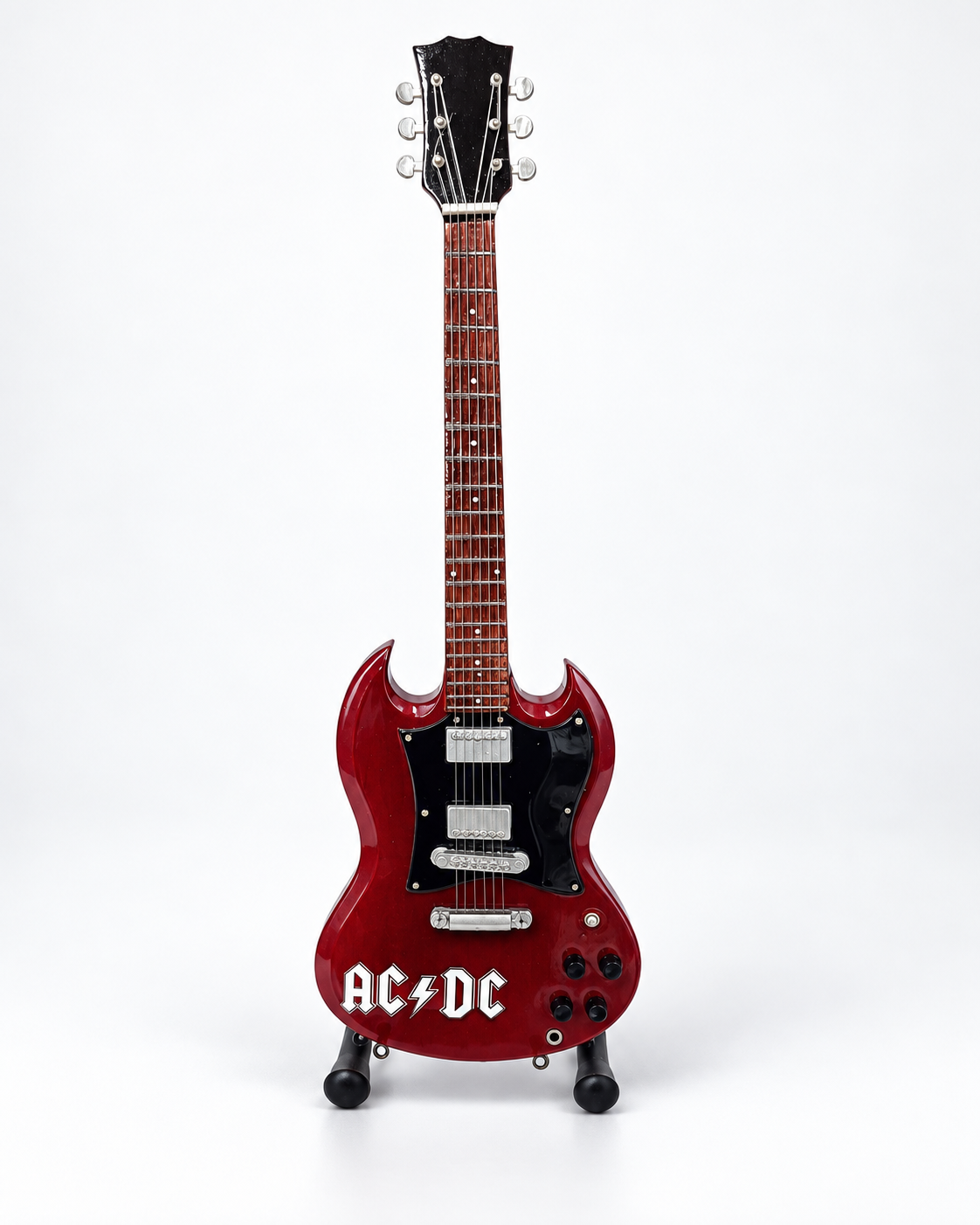
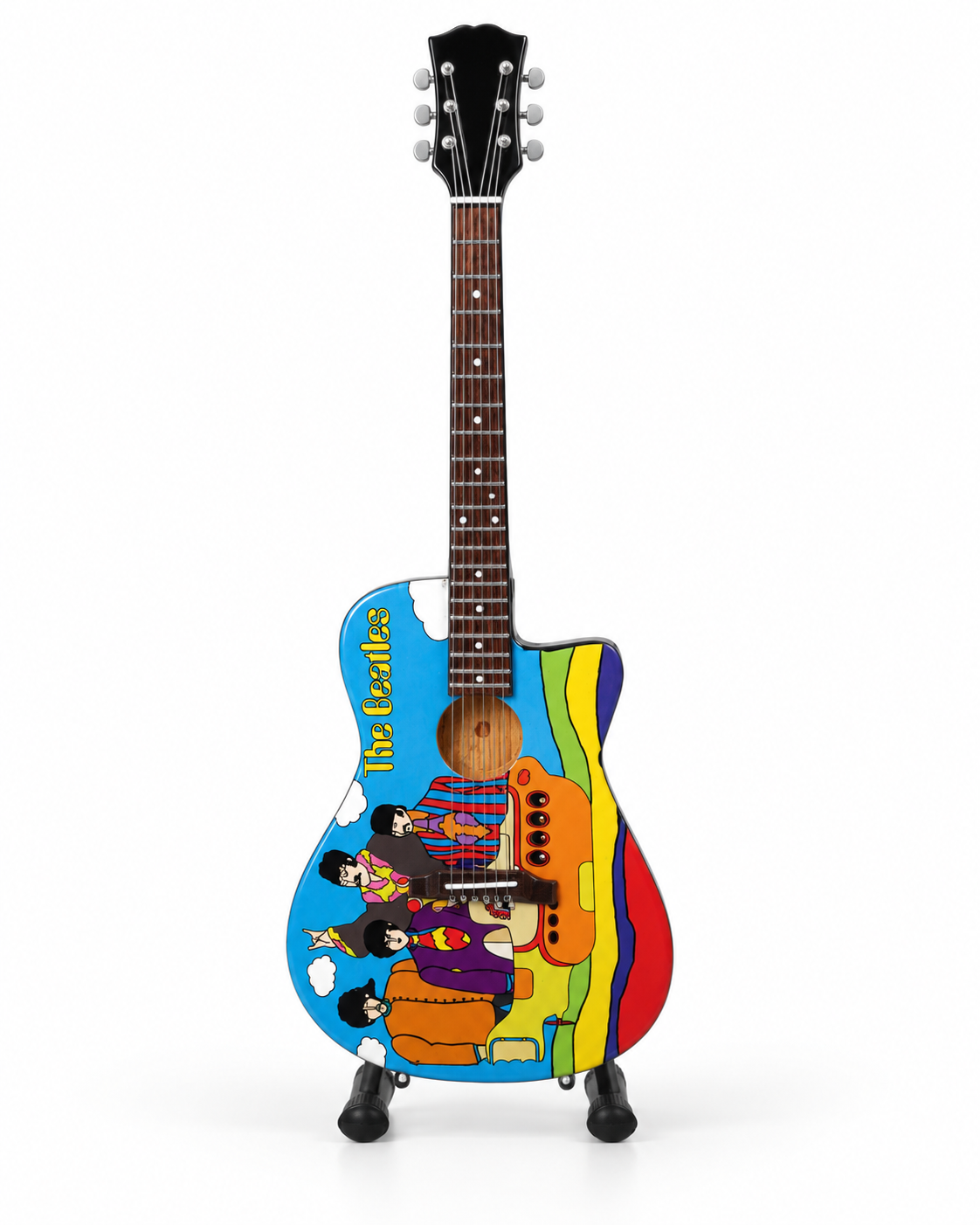
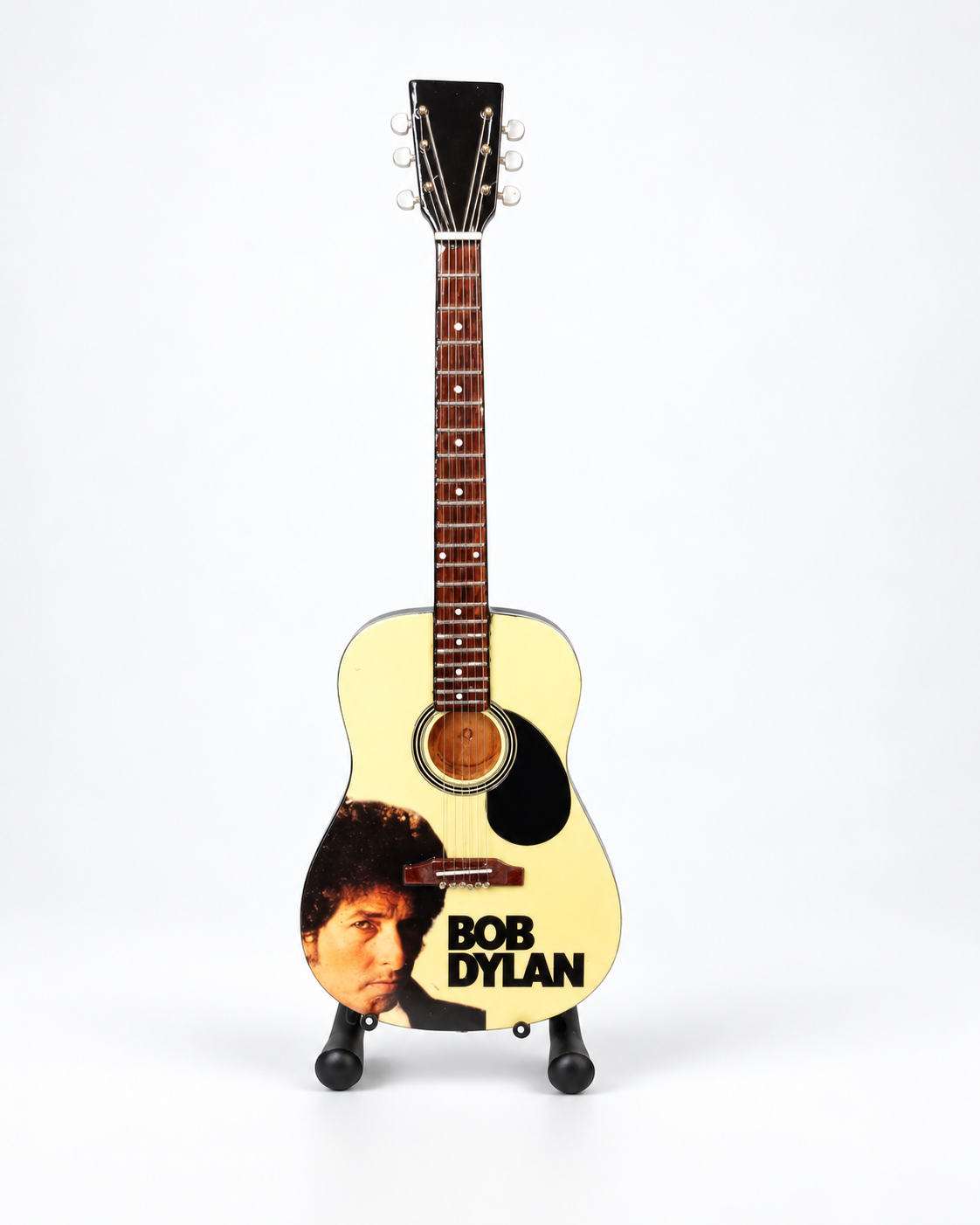
Choosing a collectible miniature guitar becomes much easier when you first decide what you want the object to represent: a musical world, a guitar silhouette, a particular look or an approach to collecting. You might pick a miniature to evoke an artist or band, complete a series, decorate a music-themed space or delight a music enthusiast with a thoughtful gift.
So the first step is not to search for the single “best miniature” in absolute terms. Look instead for one that means something to you or to the person receiving it. The miniature guitar catalogue then lets you explore models by artist, band, shape or collection.
Contents
- What is a collectible miniature guitar?
- What to check before choosing
- Choosing by artist or band
- Choosing by guitar shape
- Building a coherent collection
- How should you display miniature guitars?
- Caring for and preserving a miniature
- Choosing a miniature guitar as a gift
- Frequently asked questions
- Explore the catalogue
In brief — Start by deciding what connection you want with the miniature: artist or band, silhouette, visual style, themed collection or gift. Then compare the details actually visible, the space it takes up and your planned display. Never assume a licence, material, exact scale or authentic signature unless those details have been verified. Three to five pieces with a common theme are already enough to create a coherent collection.
- For collecting: begin with an artist, band, guitar shape or curated collection.
- For decoration: consider the available space, colours and how the miniatures will be displayed.
- For a gift: put the recipient’s musical tastes ahead of the popularity of a model.
- For a confident purchase: rely on photographs and verified specifications on each product page.
What is a collectible miniature guitar?
A collectible miniature guitar is above all an object to observe, display and preserve. It reproduces the outline of a guitar on a smaller scale, with a level of detail that varies from one model to another. Its role is unlike that of a playable small guitar, travel guitar or children's instrument: here, the appeal lies in the visual design, the musical associations and the piece's place in a collection.
This distinction matters when searching for products. Terms such as “mini guitar” or “small guitar” can also refer to genuine instruments. For collectible objects, more precise expressions include miniature guitar, collectible miniature guitar or decorative guitar miniature if display is the main purpose.
A miniature may appeal because of its musical association, its colour, its overall shape, the way it completes a series or simply its visual impact. You do not have to play guitar to start collecting. Knowing a few key criteria, however, will help you avoid scattered purchases and develop a more consistent selection.
What to check before choosing
Before comparing artists or models, examine the miniature's actual specifications. A good product listing should show what you will really receive, without encouraging assumptions based on the model's name.
The overall silhouette
Shape is often the first thing you notice. Some miniatures have an instantly recognisable outline: double cutaway, heavier body, SG, Telecaster, Flying V, acoustic or another shape. Even if you do not know a model's precise history, its geometry strongly affects the look of a collection.
Finish and visible details
Body colour, contrast with the neck, patterns, decorative elements, pickguard, bridge, tuners or stand: pay attention to what the pictures really show. Two miniatures from the same family can look completely different when displayed. Photographed details should therefore carry more weight than a generic product description.
Size and space requirements
If dimensions or scale are stated on the product page, use them to plan the space needed. A collection of a few pieces can soon fill an entire shelf. Think ahead about shelf depth, available height and whether several stands can fit next to each other.
Stand and presentation
If a stand is included or pictured, check how the miniature is presented. Some collectors prefer a uniform display using matching stands; others enjoy mixing styles. What matters is a layout that lets every object be seen without crowding.
Verified information only
Do not confuse a visual association or inspiration with an officially licensed product. If a listing does not explicitly confirm a licence, material, exact scale or authentic signature, do not assume any of these. For a serious collection, missing information is better than an imprecise promise.
Choosing by artist or band
Collecting by artist or band is one of the most intuitive approaches, particularly when your musical tastes are well defined. Instead of accumulating unrelated shapes, you can assemble a small set around one musical universe and compare the models associated with it.
The catalogue, for example, lets you explore miniatures associated with Johnny Hallyday, The Beatles, Kurt Cobain / Nirvana, AC/DC or Elvis Presley. These pages are useful when you know the music you are looking for but are choosing between several models.
To prevent the collection becoming monotonous, add a second criterion: vary shapes, colours or visual eras. Conversely, if you enjoy a very cohesive display, choose several miniatures linked to the same group or artist.
Keep one simple rule in mind: an artist's or band's name does not describe the product on its own. The miniature's product page is where you should check its appearance, model number and available specifications. Artist pages primarily help you discover and compare.
Choosing by guitar shape
Another approach starts with silhouette rather than artist. It works especially well for guitar enthusiasts who recognise major guitar families at a glance, as well as collectors seeking a harmonious visual arrangement.
The catalogue includes families such as Stratocaster, Les Paul, SG, Telecaster, Flying V, acoustic guitars, basses, resonators and other designs. These terms serve as navigation markers for distinguishing shapes within the collection.
A collection focused on one shape highlights differences in colour, finish and musical associations. A mixture of outlines, on the other hand, adds rhythm to a shelf. Neither approach is universally better: the right choice depends on the effect you want.
If you are just starting, choose two or three families that genuinely appeal to you before expanding. This avoids buying simply because an item is available and gives your selection a clear visual direction. The Silhouettes S-Type and Acoustic Sessions collections illustrate how to browse by form or mood.
Building a coherent collection
A collection becomes more interesting when it follows a common thread. That theme does not have to be rigid, but it helps you decide which pieces to buy and which to leave behind. There are several ways to build such a collection.
- By artist or band: all models connected to one musical universe.
- By guitar family: different interpretations of the same silhouette.
- By era or aesthetic: vintage, rock, alternative or acoustic moods.
- By colour: a monochrome selection or one with strong contrasts.
- By curated collection: use existing selections as a starting point.
The Rock Legends, French Icons, Alternative Generation and Vintage Icons collections offer thematic groupings. They do not replace individual product pages; they give an overview and make discovery easier.
To start without losing focus, set one simple rule for your first three to five pieces: for example, “only models linked to a band I listen to”, “only SG and Les Paul shapes” or “only a rock collection with dark finishes”. After a few purchases, you will see whether to keep or broaden that rule.
How should you display miniature guitars?
A display should protect both the objects and the clarity of the collection. First, leave enough space between pieces so each silhouette is easy to recognise. When the row is too crowded, distinct objects quickly merge into a single visual mass.
On a shelf, you can arrange miniatures by apparent size, colour, artist or shape. Symmetry suits a uniform collection, while a more relaxed layout works better for very different silhouettes. If you use several levels, position the tallest or most visually complex pieces so they do not hide others.
Do not choose a location based on decoration alone. A spot where items are frequently touched, knocked over or exposed to unsuitable conditions may not be ideal. For a collection intended to last, access should be balanced with stability.
For more details, read our guide How to display miniature guitars, which covers display cases, shelves, stands, colours and arrangements. The important point here is to make sure you have suitable space before buying more pieces.
Caring for and preserving a miniature
Care should remain simple when the exact materials are unknown. Gentle, regular dusting is usually safer than choosing chemical products at random. Never apply cleaners intended for full-size guitars, furniture or metal without knowing what each part of the miniature is made from.
Handle pieces carefully, particularly thin or protruding details. For a collection that stays on display, preventing dust build-up is preferable to having to use aggressive cleaning methods later.
If a miniature has delicate parts or an identified material, its listing or a dedicated guide should explain the appropriate care. Otherwise, stick to gentle, non-abrasive and reversible methods. Our guide Cleaning and preserving a miniature guitar outlines useful general precautions.
Choosing a miniature guitar as a gift
When buying a gift, the difficulty is often that you know less about guitar models than the recipient. You do not need to become an expert, however: a few clues will narrow the choice.
- Identify an artist or band they enjoy.
- See whether they play a particular type of guitar or prefer a certain look.
- Choose a colour that fits their taste or decorating space.
- Check whether they already collect a particular theme before introducing something very different.
- If in doubt, choose a miniature they will immediately recognise rather than one selected only for general popularity.
A miniature can be a personal music-themed gift without requiring the budget or space of a real instrument. Its appeal lies in the link between the object and the recipient's tastes. For a more detailed method, see Giving a miniature guitar: how to choose the right one.
Further guides for building your collection
This main guide introduces the key criteria. The following articles explore particular needs without repeating the same advice on every product page.
- Starting a miniature guitar collection: find a theme and select your first pieces.
- Choosing by artist or band: organise a collection around a musical universe.
- Choosing by shape and silhouette: S-Type, Les Paul, SG, Telecaster, Flying V or acoustic.
- Displaying your miniature guitars: arrange a display cabinet or shelf without overcrowding it.
- Cleaning and preserving a miniature: care, handling and display conditions.
- Toy, decoration or collectible?: understand the purpose and buying criteria.
- Rock decor and miniature guitars: integrate the pieces into a music-inspired interior.
- Giving a miniature guitar: choose a gift based on the recipient's preferences.
To explore guitar shapes in more detail, also see the guides to S-Type, Les Paul, SG, Telecaster and Flying V. For more themed routes, explore the guides on rock collecting, French music and acoustic guitars as well.
Frequently asked questions
Can you play a miniature guitar?
Miniatures sold as collectibles are made for display and collecting, not to replace a playable instrument. If you are looking for a small guitar you can actually play, look for a different type of product.
What is the best way to start collecting?
Start with one theme: an artist, band, guitar family, colour or curated selection. Three to five coherent pieces are enough to see whether you enjoy this approach before expanding.
Should you choose by artist or guitar model?
Both approaches make sense. Choosing by artist ties the collection closely to your musical tastes; choosing by shape often produces a more uniform look. You can combine the two.
How can you tell whether a miniature is officially licensed?
Never assume this from a name, colour or graphic. An official licence must be clearly stated in the product information. Without verified confirmation, do not describe the miniature as official or licensed.
Can you collect miniatures from very different genres?
Yes. A collection does not have to be uniform. You can arrange different interests in distinct areas: a rock shelf, an acoustic series, a French artists section or a display organised by silhouette.
How do you choose a miniature for someone else?
Start with their musical tastes. A favourite band or artist is generally a better clue than a guitar shape chosen at random. Colour and available display space can help decide between options.
How many miniatures make a collection?
There is no meaningful minimum. Two or three pieces chosen around a common idea can already mark the beginning of a collection. Personal interest and coherence matter more than quantity.
Explore the catalogue
The best way to choose now is to compare models that are actually available. Browse the collectible miniature guitar catalogue, filter by artist, band, model or collection, then open the product pages that best match your interests.