


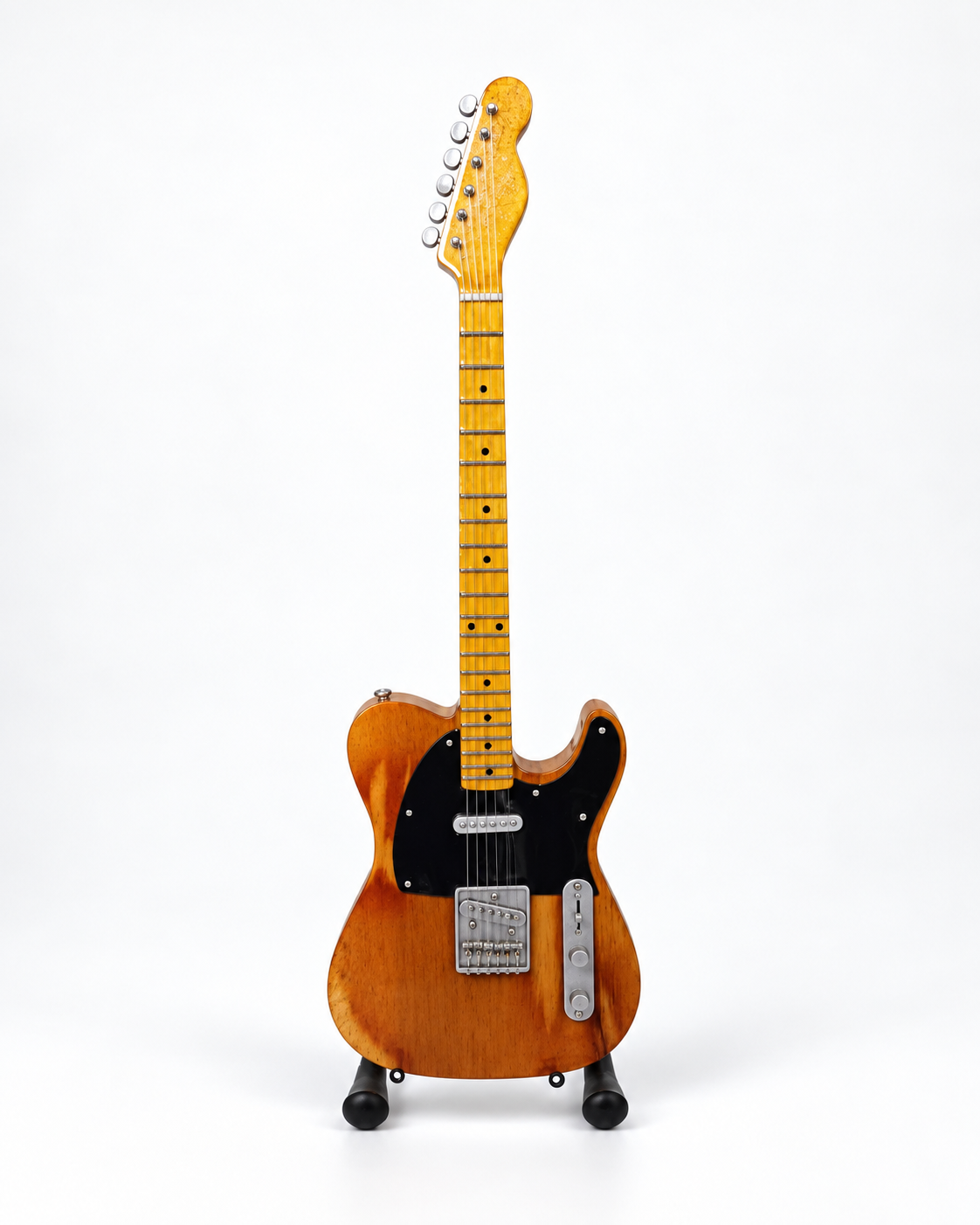
Catalog examples
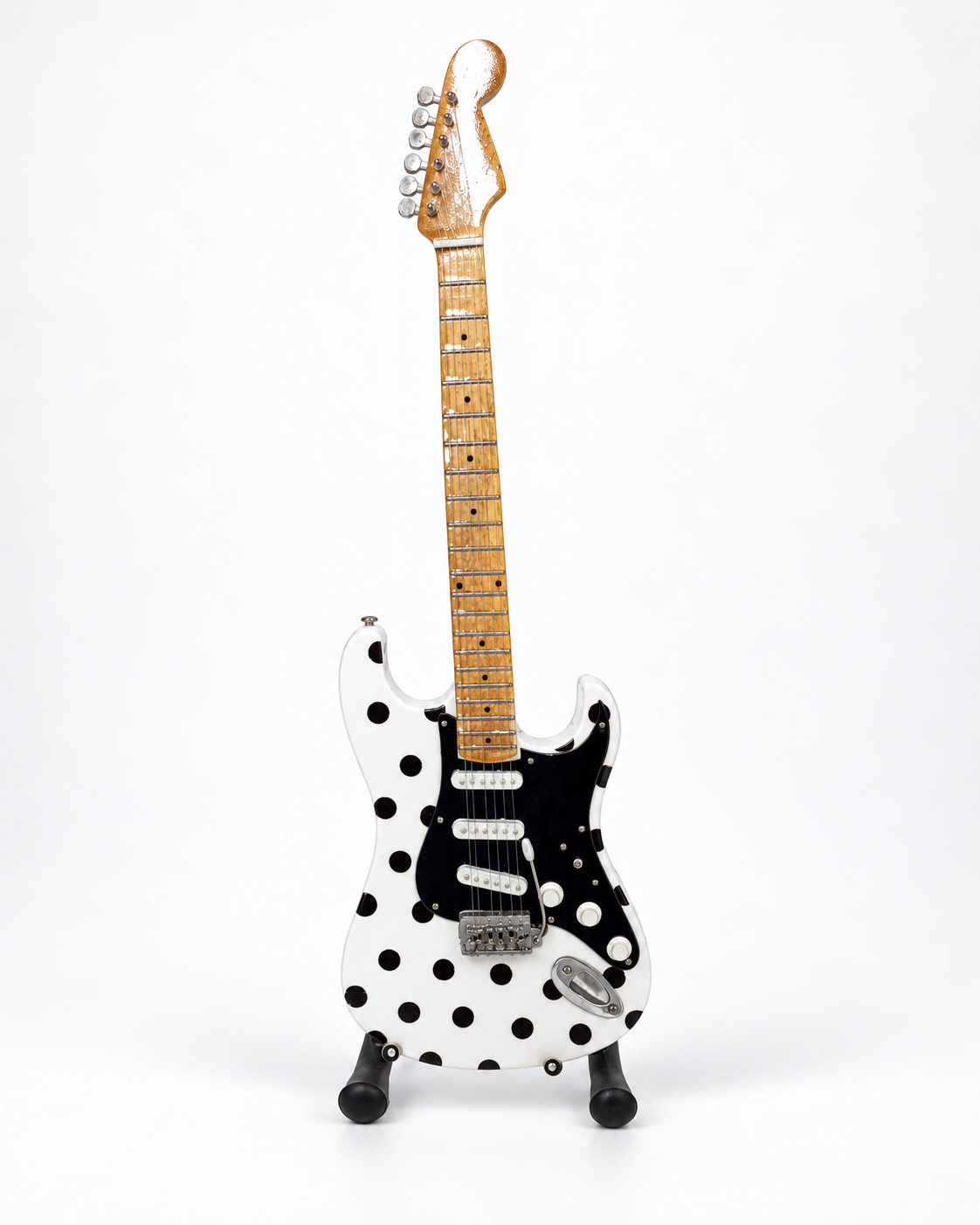
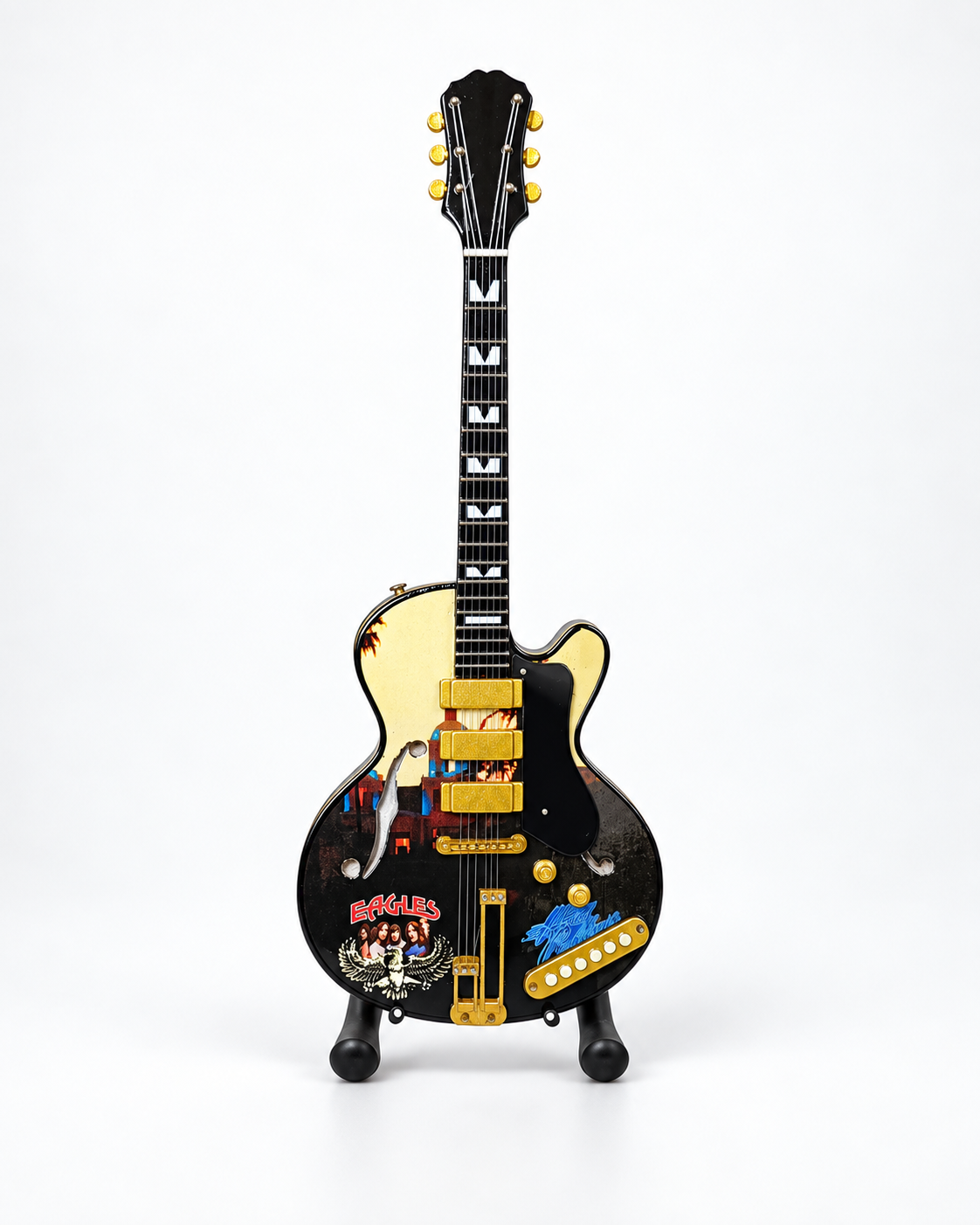
Silhouettes to compare at a glance
Begin with the object’s intended use
A miniature guitar may be sold as a toy, a decorative object or a collectible. The distinction is not simply a matter of size. It mainly depends on its intended purpose: frequent handling, play, occasional decoration or long-term display as part of a collection.
At Guitar Icons, the guitars featured in the catalogue are presented as display miniatures. They are not described as playable instruments. This distinction should remain clear in each product description and in the way the items are displayed.
Look at the finish and details, not just the name
To judge the appeal of a miniature, consider its silhouette, the visual quality of its decoration, colour contrasts and the consistency of the small visible details. Even a simple piece can be appealing if its shape and finish suit your collection. Conversely, an elaborate design does not automatically indicate better quality.
The guide How to choose a collectible miniature guitar helps identify more useful criteria than the fame of the associated name alone.
Do not confuse editorial associations with official status
An artist, band or model name in a catalogue does not, by itself, prove that a product is officially licensed. Likewise, an image resembling a signature should not be described as an authentic autograph without specific documentation.
For a serious collection, this caution is an advantage: it helps distinguish what is actually documented from what is based only on appearance or editorial association.
Decoration and collecting can go hand in hand
An object can have decorative value and still be part of a collection. A miniature chosen for its colour or silhouette may become the focal point of a shelf, then later join a larger series organised by artist or shape.
If decoration is your main goal, the miniature guitar and rock décor guide offers ideas for creating a coherent display without accumulating too many objects.
The right criterion: know why you chose it
Rather than searching for a universal definition of a collectible, ask what earns the piece its place: a silhouette missing from your display, a musician central to your tastes, an unusual finish or simply its visual appeal. A collection becomes coherent when those choices start to complement one another.