


Catalog examples
Silhouettes to compare at a glance
A softer collection through shapes and colors
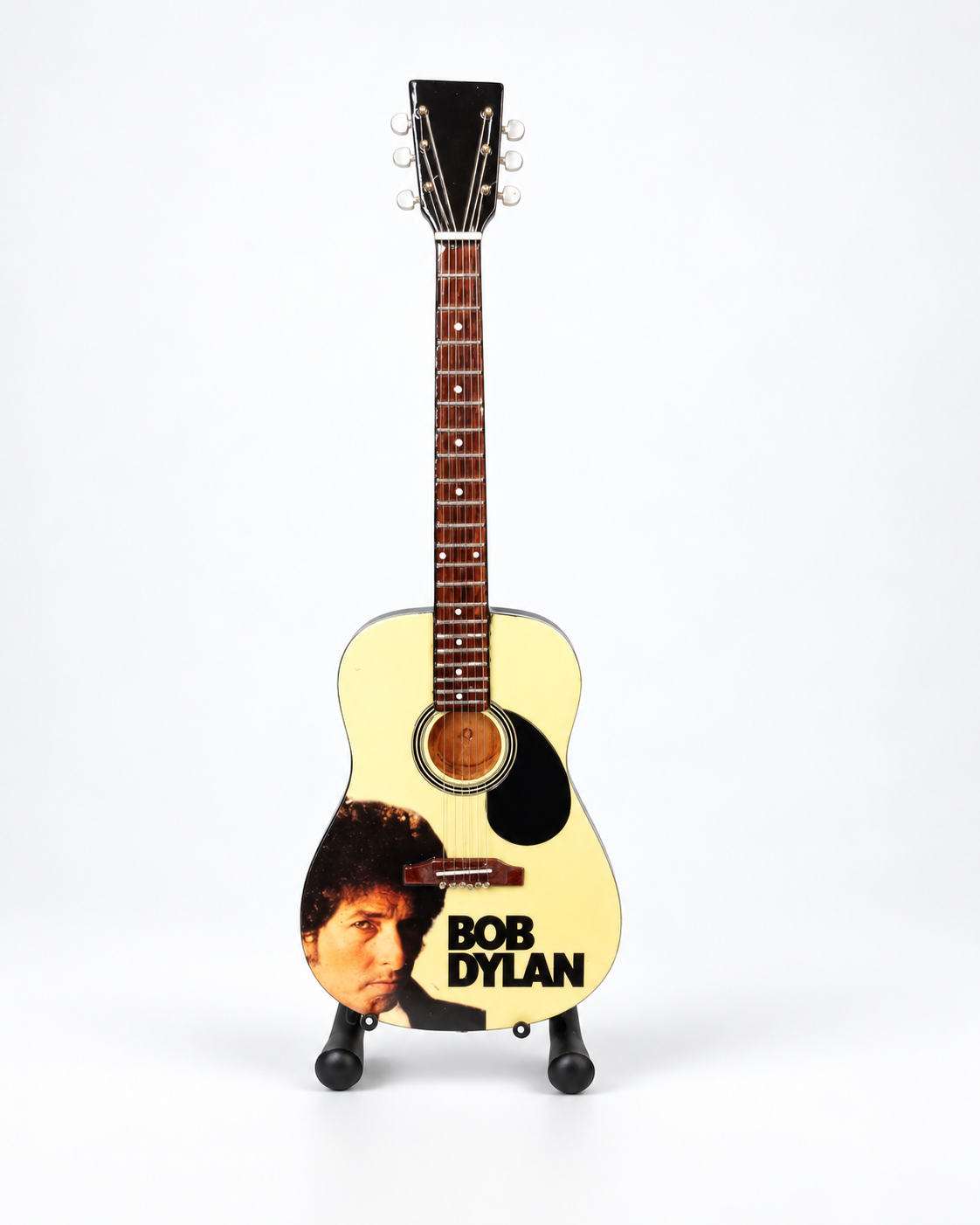
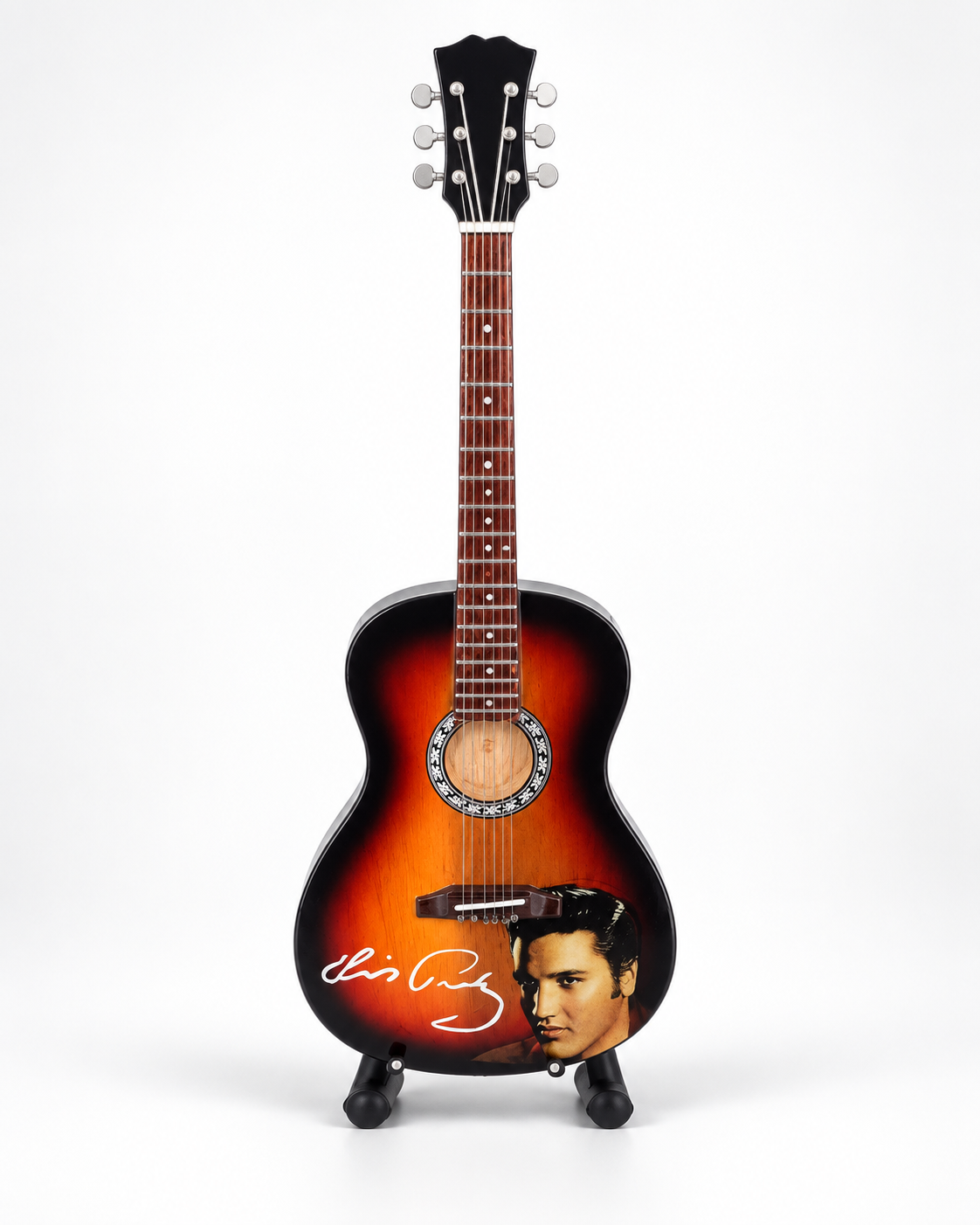
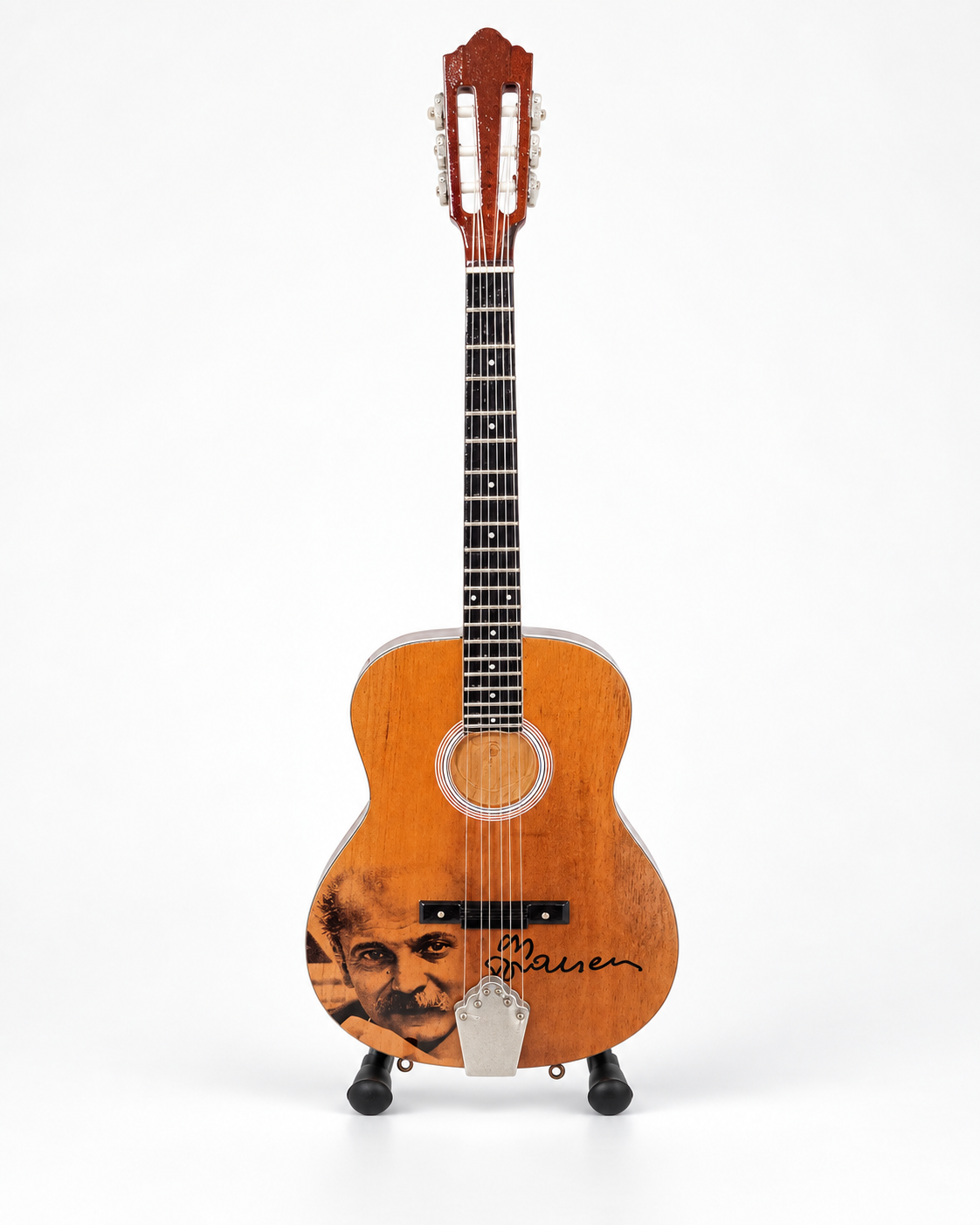
Acoustic miniatures have a different presence from electric guitar shapes. Their rounder bodies take up more visual space, while wood, sunburst, black or cream finishes often create a warmer atmosphere. The Acoustic Sessions collection makes it easy to compare these variations within one musical world.
Play with finishes rather than silhouettes
When several pieces share a similar acoustic shape, their main differences are often the color and decoration. A black finish creates a graphic look, sunburst adds depth, and a light or pink shade feels more decorative. These contrasts can make an engaging series without introducing many different body styles.
Connect artists with the visual mood
The pages dedicated to Elvis Presley, Bob Dylan, Johnny Cash or Georges Brassens let you explore acoustic miniatures tied to very different musical worlds. For collectors, the goal is to choose pieces that work together visually rather than attempting to cover every artist.
Use an acoustic as breathing room in an electric collection
You do not have to devote an entire display case to acoustic guitars. A single piece can create a transition between two groups of electric miniatures. Its rounder shape offers a visual pause and breaks up rows of similar silhouettes.
Give wood finishes the right light
Wood and sunburst finishes look their best under soft lighting that reveals their gradients without producing excessive glare. For display planning, read our guide to displaying miniature guitars.
To put this choice into a broader collecting approach, consult the guide to choosing a collectible miniature guitar : it connects shape, musical influences, interior decor and display decisions.
Compare bodies, colors and illustrations
Two acoustic miniatures can have a very different visual impact. A sunburst finish draws attention to the center of the body, light wood feels gentler, while black or burgundy brings a stronger contrast. Portraits and lettering change the look too: some models resemble a classic decorative guitar, while others work almost like small illustrated posters.
For a series of three pieces, try alternating a light acoustic, a dark finish and a heavily illustrated model. This creates visual rhythm while staying within one silhouette family.
How to display an acoustic miniature well
The rounded body has a greater visual presence than the neck. A front view shows off the sound hole and artwork, while a slight angle helps distinguish similar models. Avoid crowding them against bulky shapes; a little space around the body preserves their warmer character.
What to look for in a product photo
On an acoustic miniature, first examine the outline of the body, the sound hole, the neck color and the amount of decoration. These four features are often enough to compare two references without making assumptions about materials or history. If a detail is not visible or documented, leave it out of your decision. Looking carefully at images is especially useful when several models share similar wood shades.